

[php_everywhere]
Categories
Articles
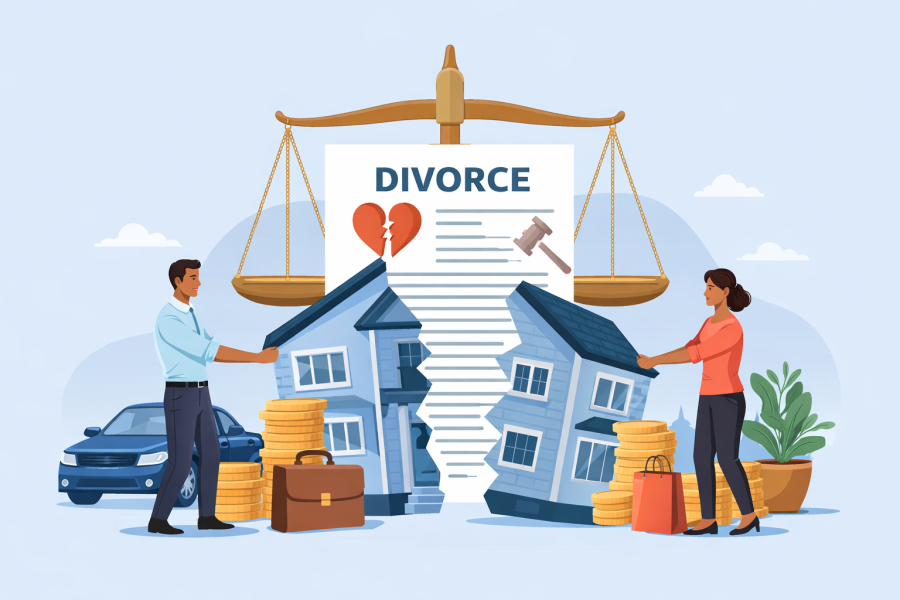







In December 2025, Ghana’s highest court quietly answered a question that affects many families, though few speak about it openly:
If one spouse starts building a house before marriage, but the other helps to complete it after marriage, does the house belong to both of them?
The case arose from the troubled marriage of Amma Owusu Sarpong and Kojo Owusu Sarpong. Their story, though personal, reflects the lived reality of many households across the country.
A few facts about the case.
Mr. Sarpong began building a house at Kasoa before he married. At that time, the structure stood only partly completed.
Later, he married Mrs. Sarpong. During their marriage, life unfolded as it does for many couples:
• they lived together for some years,
• they faced hardship,
• they moved between Ghana and the United Kingdom,
• and they tried, with mixed success, to build a life together.
During this period, the house at Kasoa continued to grow.
Mrs. Sarpong supervised the building works when her husband was away. She sent money. She helped secure loans. She handled workers. She supported the project in ways that were not always written down, but were real and constant.Eventually, the marriage broke down.
When they went their separate ways, a difficult question remained: Who truly owned the house?
Different answers from different courts
The High Court ruled that the house should be shared equally. However, the Court of Appeal reduced the wife’s share, saying her contribution was smaller. Finally, the matter reached the Supreme Court.
There, the judges looked carefully at the story behind the walls and cement — not only who bought the land or who poured the first concrete, but who helped turn an unfinished structure into a livable home.
The Court’s message was important and humane:
A house is not only built with blocks and money. It is also built with effort, supervision, sacrifice, and support.
The Court explained that when a marriage is in existence, and one spouse continues to develop a property, and
the other spouse actively helps — whether with money, time, organisation, or steady support, then the house may become shared property, even if construction started before the wedding.
Marriage, the Court reminded us, is not only a personal bond. It is also a partnership, and in a partnership, both visible and quiet contributions matter.
Why this matters to ordinary families?
Many people assume that only the person whose name is on the land documents owns the house. Many also believe that only cash contributions count. The Court’s decision gently corrects both ideas.
It recognises that supervising a building site, sending money from abroad, managing workers, • arranging loans, and carrying the weight of daily family responsibilities are all part of building a home.
A marriage does not turn one spouse into a visitor in the other’s life project. It turns two people into partners in a shared journey.
A lesson beyond one family
The Supreme Court restored Mrs. Sarpong’s half share in the house. But beyond the percentages, the judgment delivered a broader lesson:
A home completed together should not be taken away from one partner simply because the foundation was laid earlier. It affirmed that fairness is not measured only by receipts and dates, but by the full story of how people live, struggle, and build together.
Not every marriage ends well. But when one does end, dignity should remain. Sometimes, justice means recognising the quiet work that never appears on paper, but without which no house truly becomes a home.
Disclaimer: The information you obtain from this article is not, nor is it intended to be, legal advice. You should consult a lawyer for advice regarding your individual situation. Contacting us or viewing this blog does not create lawyer-client relationship.
